EN

What is KDK artificial turf?
KDK is a grass silk process of high-end curved silk artificial turf. Its full name is Knit De-Knit, which means "weave first and then disassemble" in Chinese. It belongs to the industry standard for curved wire processing, and its main application direction is professional croquet courts.
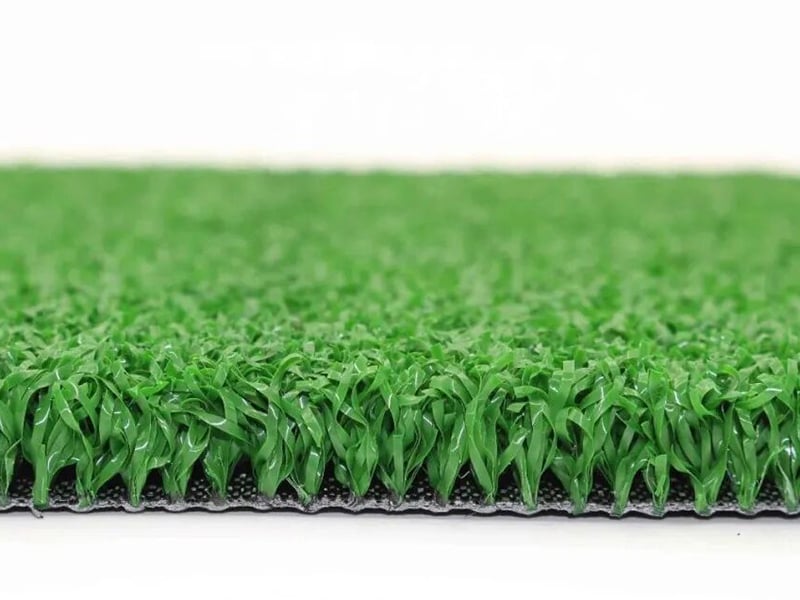
The production process of this technology is divided into two stages. In the first stage, PE monofilament is used as the raw material to produce cylindrical fabric through knitting. In the second stage, the raw fabric is disassembled. During this process, the grass fibers form a uniformly curved shape at multiple angles. Subsequently, after heat setting treatment, the curvature is fixed.
Compared with the common ATY air deformation curved silk, the shaping method of KDK grass silk is more thorough. ATY curved wire is formed by being blown and bent by air flow, with a relatively weak degree of shaping. After long-term trampling, its curled shape is prone to collapse. KDK grass fibers, after thorough heat setting, remain stable in their curled state during use and exhibit better resilience.
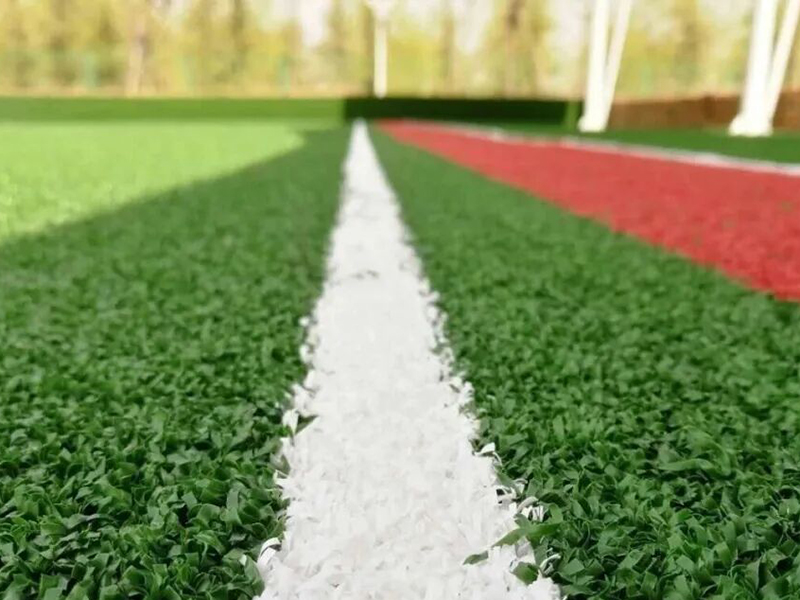
The curly shape of the grass fibers directly determines the rolling performance of the venue. The KDK grass fibers are interwoven and curled in multiple directions. After laying, the grass fibers support each other, and there is no difference in the direction of the forward and reverse hairs on the surface. The rolling trajectory of the gateball on the field remains straight, with uniform speed and no deviation. This characteristic is the basic requirement for the venue in professional gateball competitions.
The base fabric and the adhesive backing form the structural basis of the lawn. High-end KDK type lawns usually adopt double-layer PP composite grid base fabric, combined with environmentally friendly styrene-butadiene adhesive backing. The base fabric provides dimensional stability, while the back adhesive is responsible for fixing the grass fibers. Together, they ensure that the lawn does not delaminate or shed fibers over long-term use.
From the perspective of user experience, the pitch of the KDK croquet court feels relatively dense underfoot, the ball speed is stable, and the rolling resistance is small. Middle-aged and elderly gateball enthusiasts enjoy a relatively high level of comfort when walking on the field. There are no obvious signs of falling on the surface of the lawn, and the field appears clean and tidy for a long time. In terms of maintenance, daily cleaning of floating dust and fallen leaves is sufficient, and there is no need for supplementary filling operations.
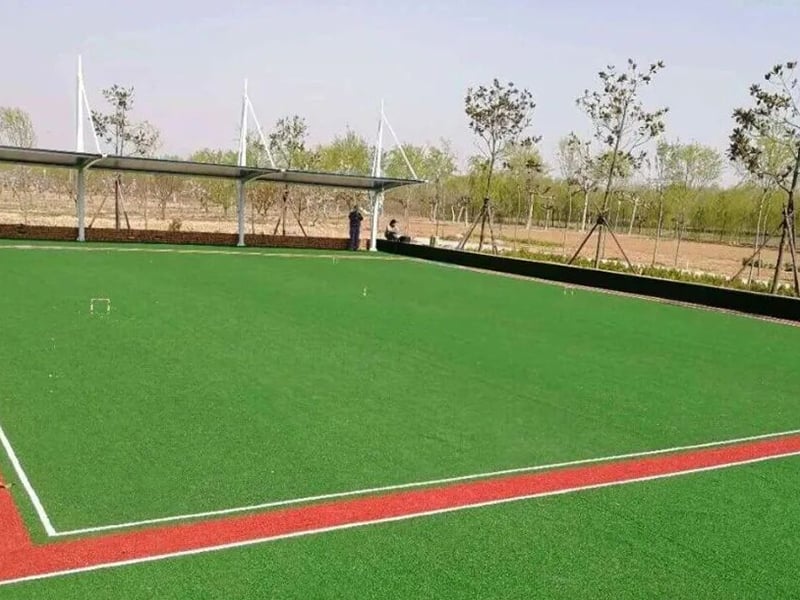
For high-intensity croquet courts that host events, KDK curved silk turf can be given priority. Its non-inverting property meets the event standards. For a community gateball court of daily leisure nature, if the usage frequency is relatively low, a regular curved silk lawn can be chosen, which has a slightly lower investment cost.
MCG Group offers one-stop supply of artificial turf, plastic running tracks, silicone PU court materials and EPDM particles. Factory direct sales are provided, and we support construction throughout the country. Our products comply with the new national standard GB36246-2018. We provide test reports with the materials upon arrival and offer free sample delivery, free on-site survey, free design plans and free quotations.