EN
EN

Artificial Grass for Landscaping: The 2026 Trend Reshaping Outdoor Projects
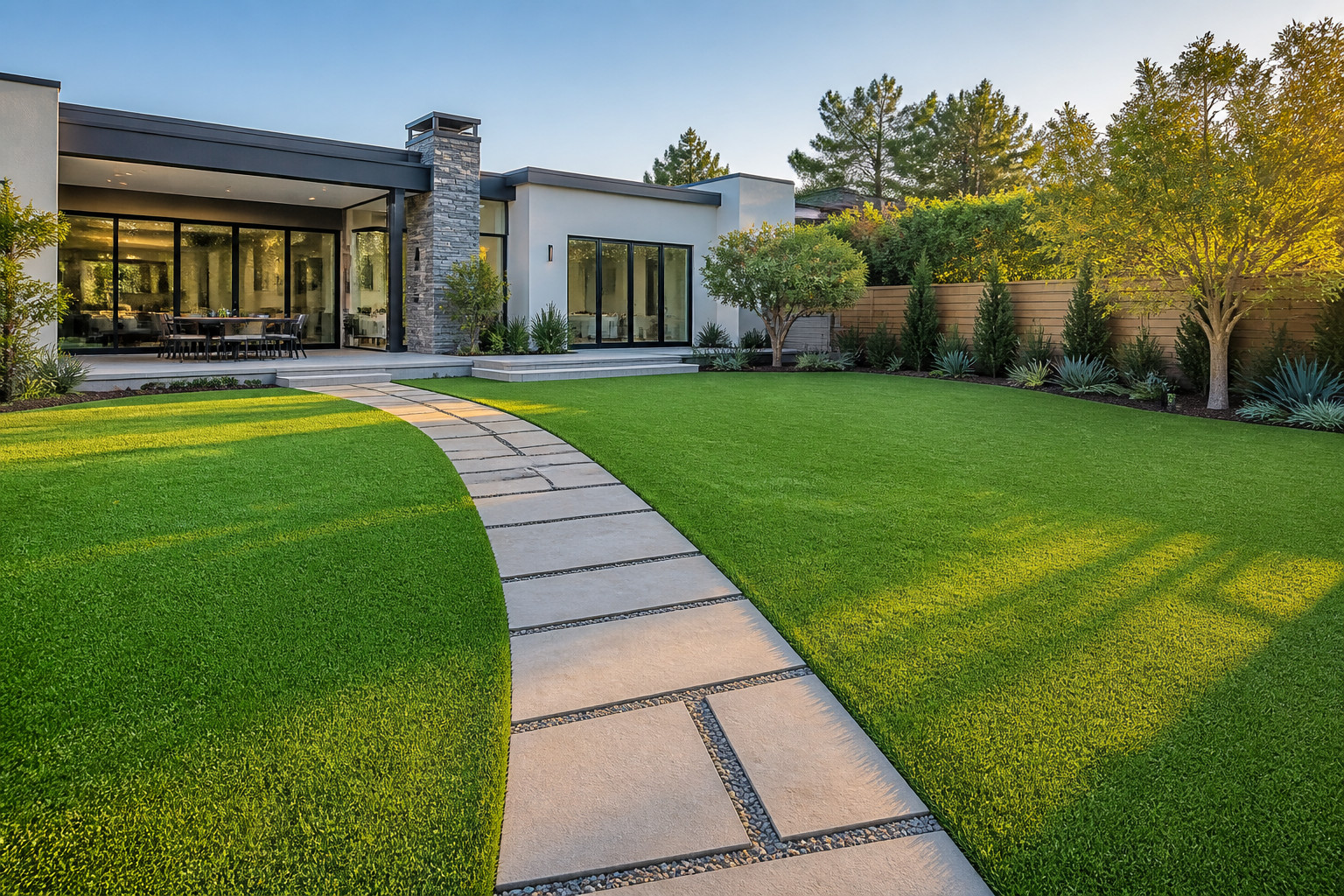
Landscape artificial grass in a modern residential setting
Artificial grass is no longer a niche choice for sports clubs. In 2026, landscape artificial grass has become a mainstream specification for residential communities, commercial plazas, resorts, rooftop gardens and municipal parks — driven by water conservation, lower maintenance economics and year-round aesthetics. For B2B buyers, the question is no longer whether to use artificial grass for landscaping, but how to source it well. Here is what is driving the shift, and how to vet a landscape turf supplier before you commit.
Why landscape projects are switching to artificial turf
Water conservation is the headline driver. In drought-prone regions from the western United States to the Middle East and Australia, outdoor irrigation accounts for a large share of total water use. The US EPA WaterSense program exists precisely because yards and landscapes are where households and facilities waste the most water. Replacing irrigation-hungry lawns with artificial turf removes that demand entirely — a decisive advantage under tightening municipal water restrictions and rising water tariffs.
Maintenance economics follow close behind. No mowing, no fertilizing, no replanting, no seasonal renovation. For property managers, hotel groups and community developers, artificial grass converts an open-ended operating cost into a predictable line item — year after year, in every season, including droughts when natural lawns go dormant or die.
Green building standards are pulling demand. Sustainable landscape design is now a scored element in leading rating systems such as LEED, which reward water-efficient site design. Drought-tolerant planting plus artificial turf is becoming a standard specification on projects pursuing certification, in hospitality, corporate campuses and public developments across Europe, the Middle East and Southeast Asia.
Aesthetics and usability no longer compromise. Modern landscape turf stays green in heat, cold and drought, handles foot traffic without mud seasons, and delivers the uniform, camera-ready look that resorts, event venues and show homes depend on.
What B2B buyers should verify before sourcing landscape turf
Landscape turf may look similar in photos, but performance lives in the specification. Verify these five points with any supplier:
1. Manufacturing substance. Is the supplier a real factory or an intermediary? MCG operates five dedicated production bases — two yarn extrusion bases, one turf production base, one sports fencing base and one rubber-plastic base — covering roughly 40,000 square meters of production area. A manufacturer that extrudes its own yarn and tufts its own turf can control color consistency, density and backing quality from the start.
2. Yarn and backing engineering. Ask for the pile density, face weight, drainage performance and UV stability of the yarn. These parameters decide how the turf looks after two years of sun exposure and how quickly puddles disappear after rain. A supplier should provide technical data sheets without hesitation.
3. A proven export track record. Bulk landscape projects need reliable capacity and consistent delivery. MCG exports more than 3 million square meters of surfacing every year — evidence of the production scale required for project-level orders.
4. Team depth and longevity. MCG employs more than 300 people with manufacturing and trading integrated under one roof (工贸一体), and has spent 25 years in the artificial turf industry. Longevity matters: a landscape installation is a long-term investment, and you want a partner who will support color-match reorders for years to come.
5. Sample and spec support. Ask for physical samples, technical documentation and accurate quantity calculations before ordering. The right supplier makes the sourcing decision easy.
From yarn extrusion to landscape-ready rolls: why factory-direct matters
When one company controls every link, buyers receive one standard, one specification and one point of contact. A typical MCG landscape supply flow looks like this:
• Yarn extrusion. Polymer yarn is produced at MCG's two yarn extrusion bases, where color and strength are controlled from the raw material stage.
• Turf manufacturing. The turf production base tufts and backs the carpet to the agreed density and drainage specification.
• Consistent batch control. Because one factory makes every roll, color and quality stay consistent across deliveries — the classic pain point of sourcing landscape turf from traders is eliminated.
• Installation insight built in. MCG's more than 10 professional domestic construction teams give its engineers hands-on feedback on how landscape turf performs on real sites, feeding back into product design and installation documentation.
Factory-direct is not a slogan; it is the difference between buying rolls from a middleman and working with the people who make them.
Where landscape turf is winning projects
Landscape artificial grass is moving beyond backyards. In 2026, the fastest-growing specifications are:
• Hospitality and commercial: resort gardens, hotel pool decks, event venues and commercial plazas that need to look flawless every day of the year.
• Urban greening: rooftop gardens and green walls, where artificial plants and vertical greenery combine with turf to deliver instant green without irrigation infrastructure.
• Residential communities: shared gardens, courtyards and show homes where developers want predictable aesthetics and low maintenance for home-owner associations.
• Municipal and public spaces: parks, playground surrounds and roadside landscapes in water-stressed municipalities.
For each of these, the landscape artificial grass product line delivers the same system discipline MCG applies to sports surfaces: engineered materials, factory-direct supply and project-scale capacity.
FAQ
Q: Is MCG a manufacturer or a trading company?
A: Both. MCG is an integrated manufacturer-trader. Production runs across five bases — two yarn extrusion, one turf, one sports fencing and one rubber-plastic — so landscape buyers deal directly with the factory.
Q: Can MCG supply landscape turf for large commercial projects?
A: Yes. MCG exports more than 3 million square meters of surfacing annually, backed by a roughly 40,000-square-meter production base and more than 300 employees — the scale needed for project-level and repeated orders.
Q: Do MCG products support water-saving landscape design?
A: Yes. Artificial turf eliminates irrigation demand entirely, making it a natural fit for drought-tolerant and water-efficient landscape strategies, and it can be combined with artificial plants and green walls for fully low-water outdoor spaces.
Q: How do I get samples or a quotation?
A: Contact MCG with your project area and application; the team will provide samples, technical data and an accurate quantity calculation for a factory-direct quotation.
Plan your 2026 landscape project with a factory-direct partner
Whether you are a landscape contractor, developer or importer, the landscape turf you specify should come from a manufacturer you can verify. Send MCG your project details for free samples and a quotation — one factory, one standard, from yarn extrusion to landscape-ready rolls.
Request samples and a free quote · [email protected] · Learn more about MCG