EN
EN

All-Weather Running Track Systems: A 2026 Buyer's Guide to Sports Track Construction
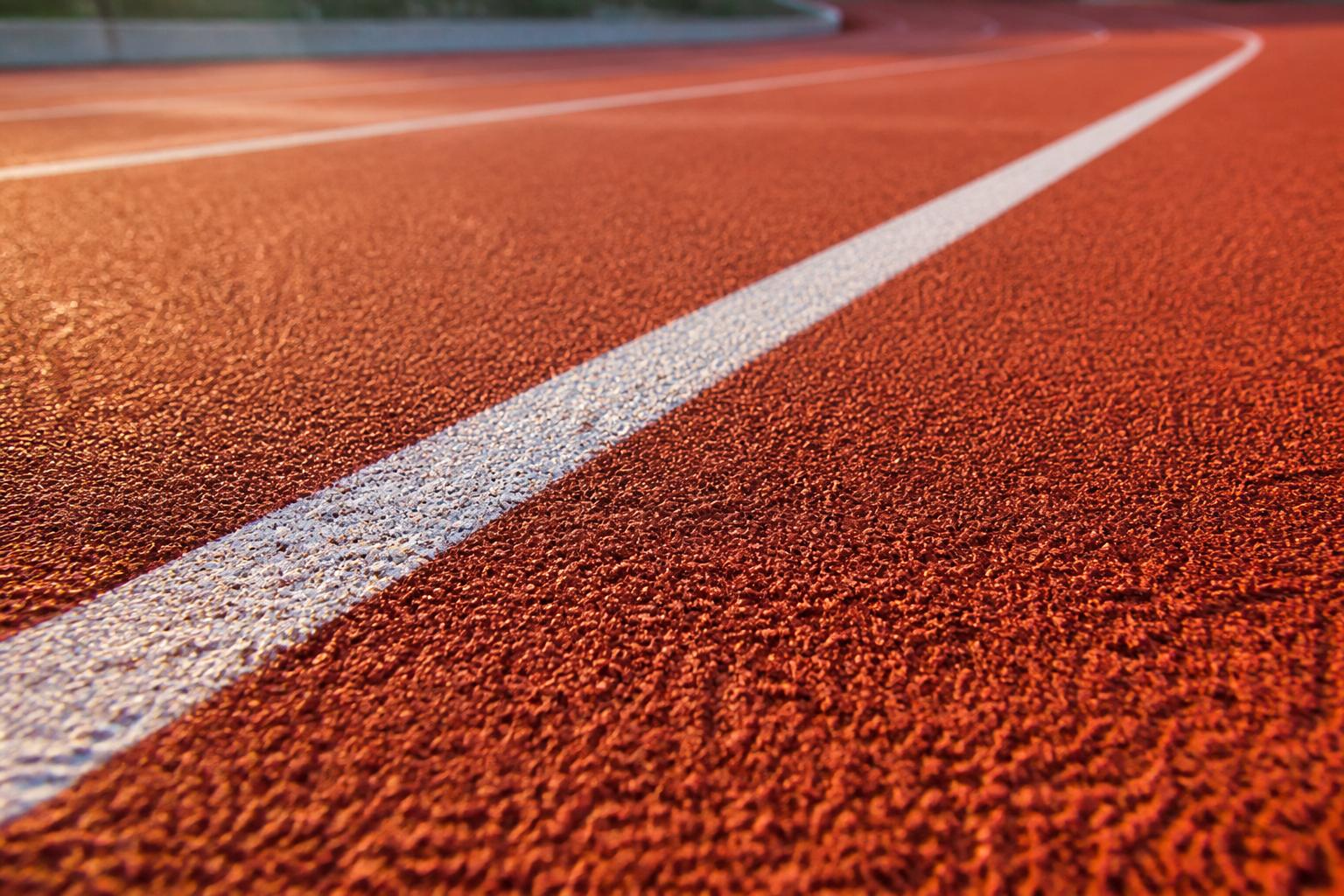
Rubber running track surface detail
A running track is one of the most demanding sports surfaces to specify — and one of the easiest to get wrong. Buyers who focus only on color and price often discover, months after installation, that the surface is too hard, too slippery when wet, or fading under strong sun. The right approach is to choose a system, not a product: understand what a modern all-weather track is made of, specify the performance factors that matter for your athletes and climate, and verify that your supplier actually manufactures the materials. Here is how to do all three.
What a modern all-weather running track is made of
A running track is a layered system engineered as a whole, not a single sheet of rubber. Four layers do the work:
• The base. A stable asphalt or concrete foundation that determines how flat and durable the track will be for decades.
• The cushion layer. Rubber granules — typically EPDM or TPE — bound with polyurethane, providing shock absorption and energy return for athletes.
• The surface layer. A polyurethane (PU) coating combined with granules that delivers grip, weather resistance and consistent traction across all lanes.
• Line markings. Thermoplastic lane markings that stay bright and stay put under heavy use.
The material families matter. Pour-in-place PU systems deliver competition-grade performance. EPDM-based systems offer proven durability at training-facility cost. TPE granules provide a softer, more elastic option for schools and multi-use venues. The right choice depends on your performance class — and that decision should be made from the specification, not from a brochure photo.
This is where manufacturing depth becomes visible. MCG produces its track surfacing and rubber-plastic materials at its own rubber-plastic base, including EPDM and TPE granules and all-weather running track surfacing. When one factory controls the granules, the binder and the finished surfacing, the system behaves as designed.
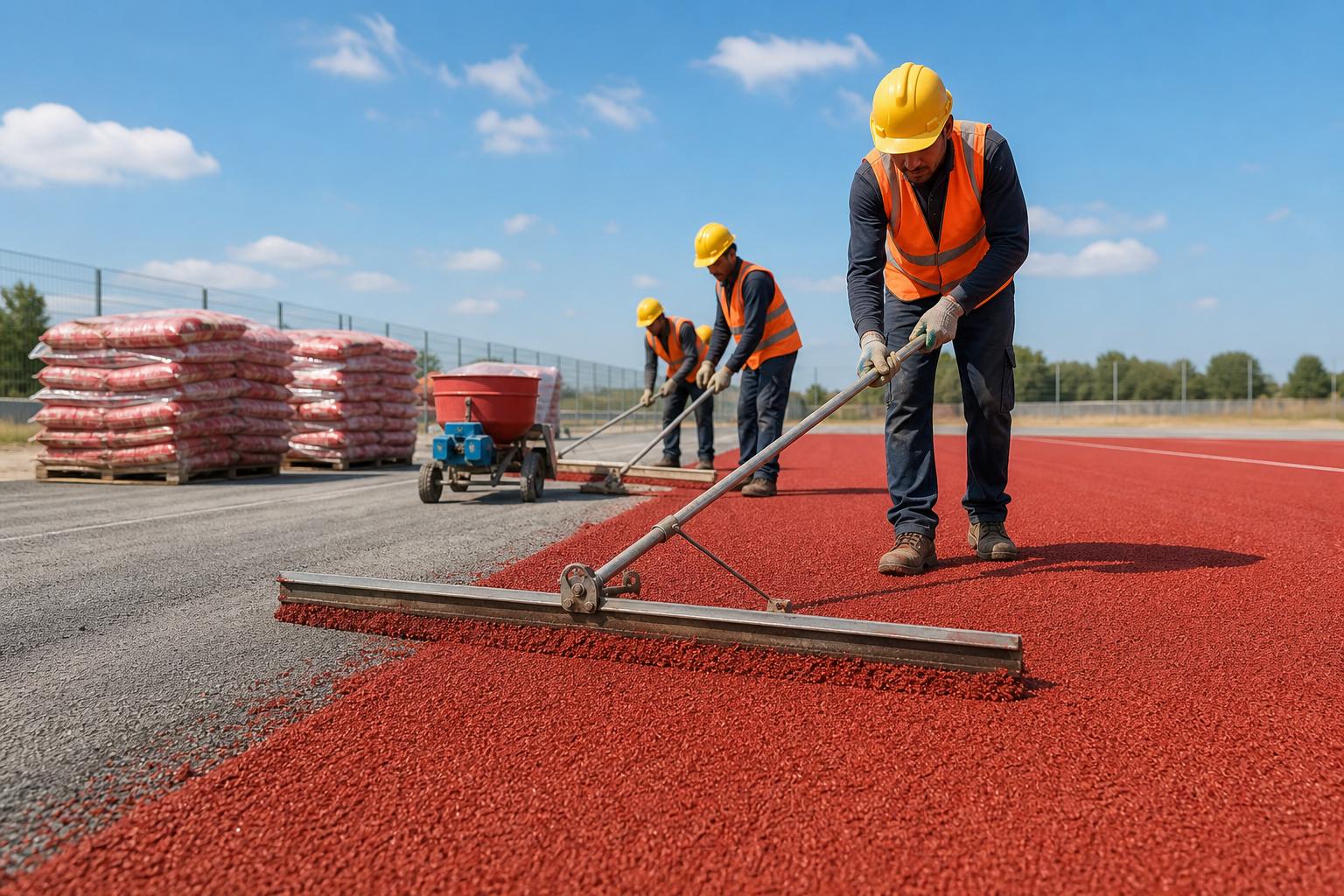
EPDM surface layer paving on a running track base
Track performance factors buyers should specify
Whatever the material family, these performance factors decide whether a track passes its first inspection or serves athletes for years:
• Shock absorption and energy return. The cushioning profile affects athlete comfort, performance and injury risk. Competition tracks are engineered to tighter performance classes than training tracks.
• Slip resistance. A track must stay grippy in wet weather — a non-negotiable safety parameter for schools and public facilities.
• Drainage and all-weather usability. Rapid surface drainage keeps training sessions running through rain seasons.
• Heat and UV stability. For projects in the Middle East, Southeast Asia and other high-sun regions, binders and pigments must resist heat aging and fading.
• Consistency across the whole surface. Lane-to-lane consistency in thickness, color and texture is what separates a professional installation from a patchwork.
Benchmark everything against recognized facility standards. The World Athletics technical standards and certified-product frameworks define what a competition-class track must deliver; training and school tracks can be specified to a cost-optimized class while staying honest about it. A serious supplier should be able to map its system to these performance classes and provide the technical documentation to prove it.
How to source a running track system you can trust
Before you issue an inquiry, verify four things about the supplier:
1. Manufacturing depth. Does the supplier make the materials — granules, binders, finished surfacing — in-house, or does it resell? MCG operates five production bases: two yarn extrusion bases, one turf production base, one sports fencing base and one rubber-plastic base, covering roughly 40,000 square meters. In-house production means the whole system comes from one QC regime.
2. Export track record. Track projects move on reliable capacity. MCG exports more than 3 million square meters of sports surfacing every year — evidence of consistent production and experience shipping project-size orders worldwide.
3. Field experience. MCG maintains more than 10 professional construction teams in China. That real-world installation experience feeds directly back into how its track materials are engineered for installability and long-term performance.
4. Team depth and longevity. MCG employs more than 300 people, with manufacturing and trading integrated under one roof (工贸一体), and has spent 25 years in the sports surfacing industry. You are specifying a surface expected to perform for many years — verify that the people behind it will still be there.
Ask for technical data sheets, physical samples and an accurate quantity calculation before you commit. The right supplier makes this easy.
Where all-weather tracks are being built in 2026
Running track demand is expanding beyond traditional athletics federations:
• Schools and universities. Education authorities from Europe to Southeast Asia are upgrading sports infrastructure, with training-class tracks the most frequently specified surface.
• Athletics clubs and training centers. Clubs need competition-grade performance on tighter budgets — where system choice matters most.
• Municipal parks and community sports hubs. Public facilities favor durable, low-maintenance all-weather surfaces that stay usable year-round.
• Emerging athletics markets. The Middle East and Southeast Asia are investing heavily in school and community athletics facilities, often in extreme-heat climates where material selection is critical.
For multi-use venues combining a track with a football pitch or court areas, the track system must be specified alongside the other surfaces — with materials engineered to work as one facility.
FAQ
Q: Does MCG manufacture running track materials?
A: Yes. MCG produces rubber-plastic surfacing materials at its own rubber-plastic base, including EPDM and TPE granules and all-weather running track surfacing — not just resells them.
Q: Can MCG supply a complete track material package?
A: Yes. Granules, binders, surface materials and related components can be supplied as a coordinated package from MCG's five production bases, with annual export capacity of more than 3 million square meters.
Q: Do MCG track systems meet international standards?
A: MCG track systems are engineered to align with recognized performance classes, including World Athletics facility standards. Request the technical documentation for your project class to review the specification.
Q: How do I get samples and specifications?
A: Contact MCG with your project type, size and climate; the team will provide samples, technical data sheets and a quantity calculation for your review.
Specify your running track system with a manufacturer who makes it
The surface you install today will serve athletes for years. Choose a system engineered as a whole — and a supplier whose manufacturing depth you can verify. Send MCG your project details for track system specifications and samples.
Request track system specs and samples · [email protected] · Explore track surfacing products