EN
EN

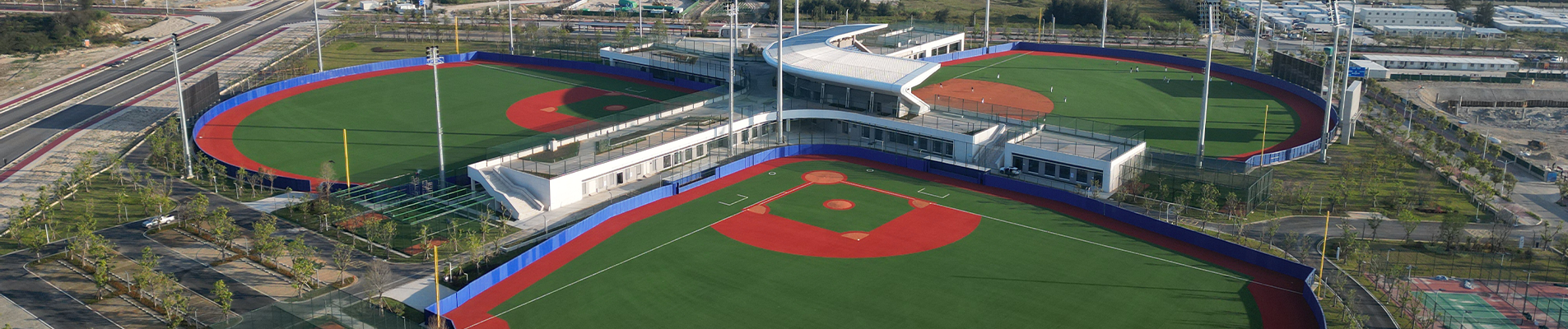
Building a football field without pitfalls
Building a football field without pitfalls: No need to fill the turf = cost savings + high reusability, making operation easier.
Many investors or venue operators often fall into the trap of "saving a little money in the early stage but spending a lot in the later stage" when building football fields - blindly choosing traditional filled lawns. Although the initial cost seems controllable, in fact, the hidden costs such as subsequent maintenance, idleness and renovation keep piling up, and the operational pressure suddenly increases. In fact, to avoid pitfalls when building a football field, choosing the right type of turf is the key: The no-fill artificial turf, with its core advantages of "cost savings and high reusability", can solve operational pain points from the root and make the construction and management of the field easier.
Key to avoiding pitfalls: Say goodbye to the 3 hidden traps of traditional filled lawns
The traditional filled lawn relies on quartz sand and rubber particles to fix the grass fibers. It seems like a mature solution, but in fact, it hides many hidden traps, causing great distress to the operators.
Cost trap: Besides the initial procurement, transportation and laying costs of filling materials (accounting for 30% to 40% of the total cost), 20% to 30% of the lost filling materials need to be replenished each year. For instance, the average annual maintenance cost of an 11-person field can reach 30,000 to 50,000 yuan, and the cumulative maintenance cost over 10 years far exceeds the initial cost of the lawn.
The no-fill turf avoids these problems from the design root and becomes the "pit-avoiding preferred choice" for football field construction.
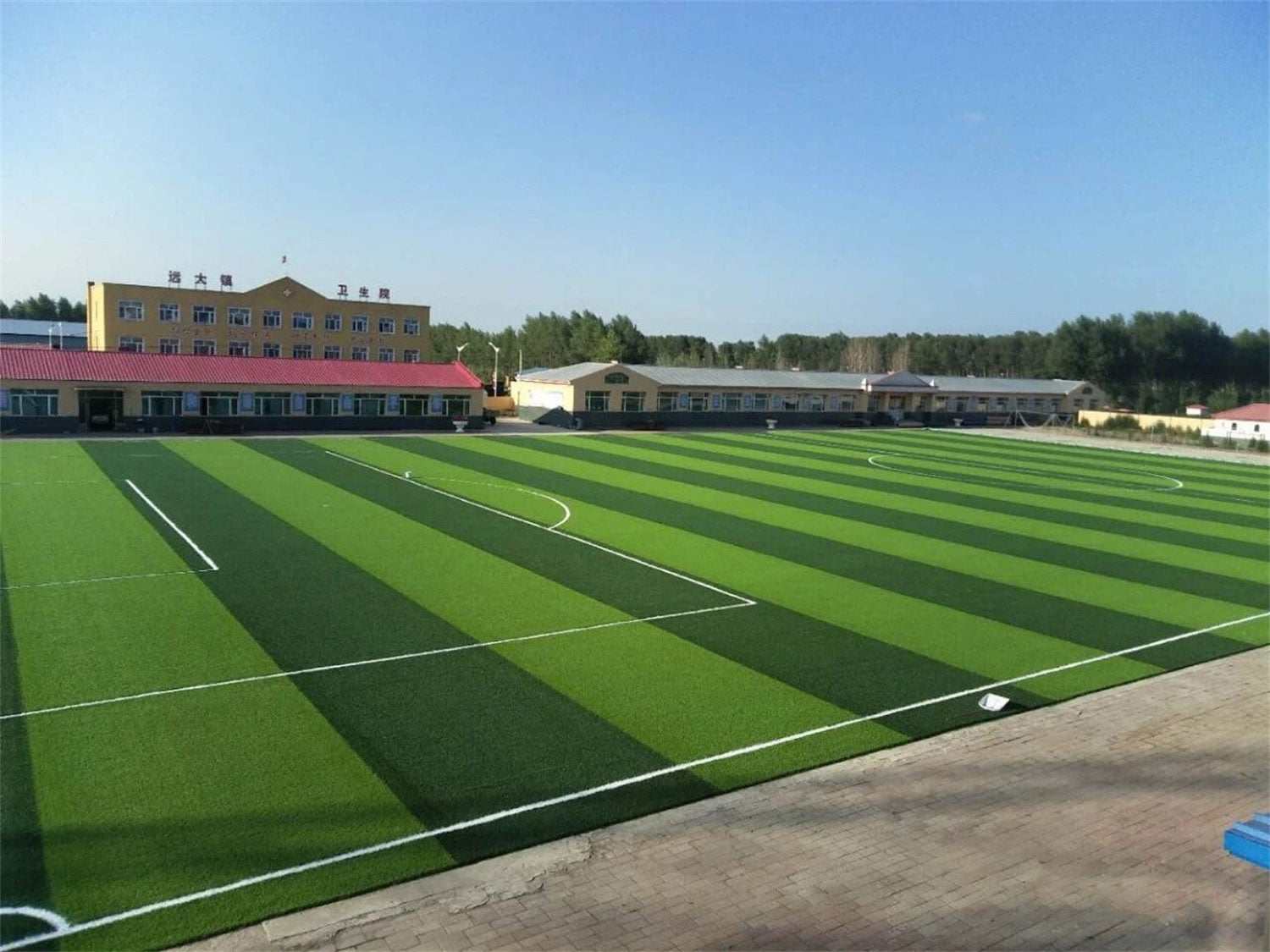
Cost savings: Reduce expenses throughout the entire cycle from construction to operation
The "cost-saving" of no-fill lawns does not merely mean reducing the initial investment, but rather achieving controllable costs throughout the entire cycle, truly helping operators "save money and worry less".
1. Construction phase: Cut hidden expenditures and shorten the implementation cycle
The no-fill lawn does not require the purchase of filling materials such as quartz sand and rubber particles, directly saving the cost of these materials and the corresponding transportation and handling costs. Meanwhile, its laying process is more simplified, eliminating the need to repeatedly adjust the flatness and thickness of the filling materials. The construction period is 20% to 30% shorter than that of traditional sites. Take a standard 7-a-side football field as an example. It can reduce the construction time by at least one week, indirectly lowering the opportunity cost caused by idle sites. It is especially suitable for commercial venues and campus sports fields that need to be put into use quickly.
2. Operation stage: Reduce repetitive investment and lower maintenance pressure
Daily maintenance is a major expense for traditional venues, but avoiding lawn filling can completely bid farewell to this problem. It adopts high-density tufting technology and three-dimensional support structure. The grass fibers are naturally upright and do not rely on fillers. Daily maintenance only requires simple sweeping of fallen leaves and rinsing of dust, which can be completed by ordinary cleaners without the need for professional teams or dedicated equipment. Data shows that the average annual maintenance cost of no-fill lawns is only 1/3 to 1/5 of that of traditional filled fields, and it can save 200,000 to 400,000 yuan in maintenance costs over 10 years.
3. Long-term stage: Extend service life and reduce replacement costs
High-quality no-fill lawns are made of food-grade PE/PP grass fibers and are added with sufficient anti-UV factors and anti-aging additives. Their service life can reach 8 to 12 years, which is about 50% longer than that of traditional filled lawns (5 to 7 years). A longer service life means that there is no need to frequently renovate the site, significantly reducing the cost of asset replacement. Especially for investors who pursue long-term stable returns, the cost-performance advantage is extremely obvious.
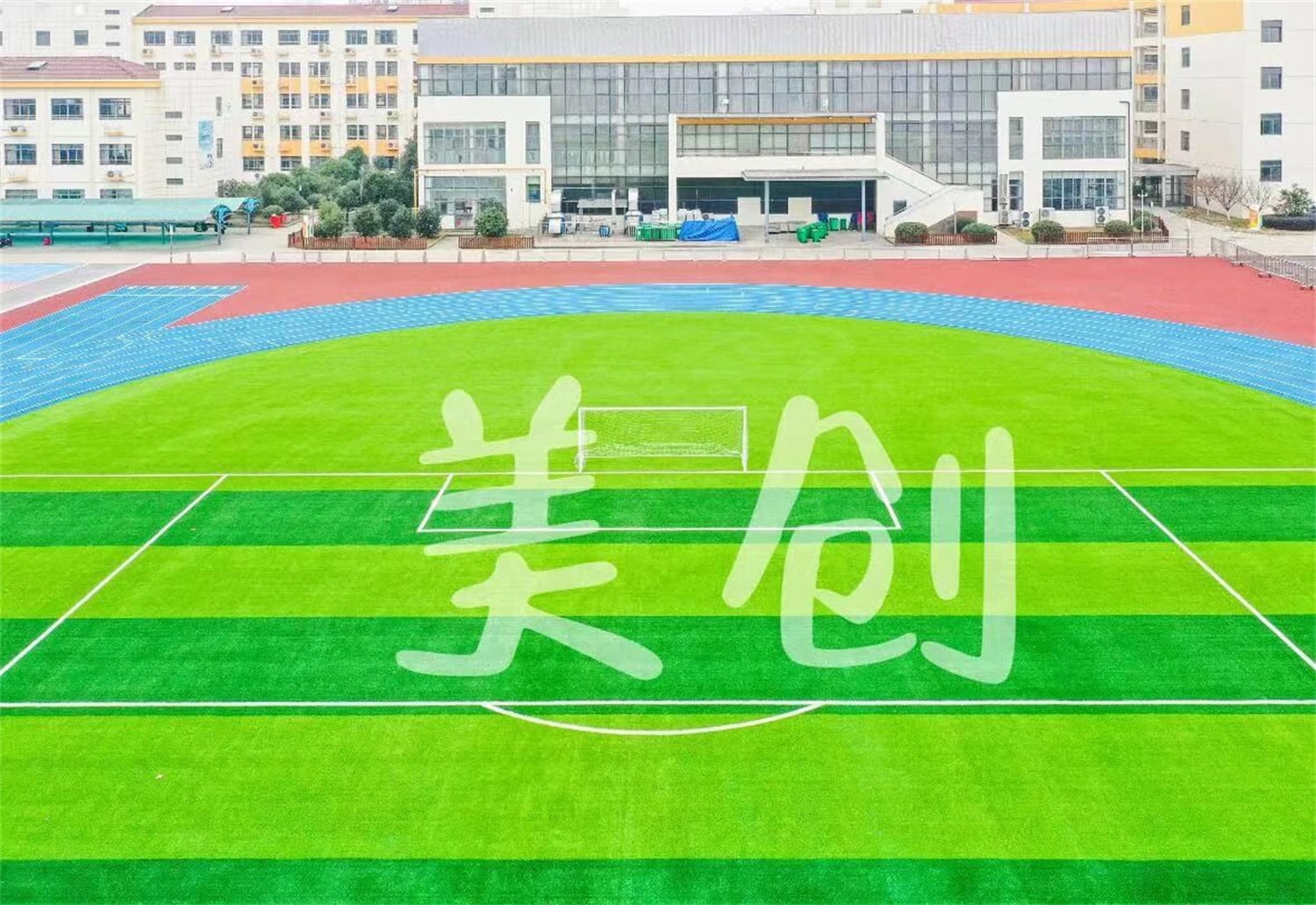
High reuse: Breaking the boundaries of scenarios and enhancing the value of the venue
The core source of revenue for a football field lies in the utilization rate of the pitch. The no-fill turf, through its "high reuse" feature, maximizes the value of the pitch and completely bids farewell to the problem of "single function and high idle rate".
1. Increase effective usage time and reduce idle wear and tear
The no-fill lawn adopts a three-dimensional permeable base fabric design, with a drainage rate of over 160mm/h. It can be put back into use within one hour after a heavy rain without waiting for the filling material to dry. Meanwhile, its grass filament structure is stable, not prone to falling over or clumping, and does not require frequent closure and maintenance. The effective usage time each year is 30 to 50 days longer than that of traditional sites. For commercial venues, the extra usage time can be directly converted into income such as rental and training, significantly enhancing the profit level.
2. Expand diverse usage scenarios and break through functional limitations
Traditional filling fields are only suitable for professional football due to the risk of particle shedding on the surface. The surface of the no-fill lawn is smooth and free of debris. Besides football training and matches, it can also be used in various scenarios such as frisbee, rugby, corporate team-building, parent-child activities, and outdoor events. Take the community football field as an example. It can increase additional income by hosting weekend parent-child sports activities and corporate expansion activities. The campus venues can meet various needs such as physical education classes and sports meets, achieving "multiple uses in one place".
3. Compatible with multiple types of venue scenarios, it offers greater flexibility in implementation
The no-fill lawn does not require complex base modifications. Whether it is a 5-person, 7-person or 11-person venue, whether it is a commercial venue, a campus or a community park, it can be quickly implemented. Meanwhile, its environmental protection and safety features (no release of harmful substances and no risk of particle shedding) make it more likely to be favored by schools and government agencies for cooperation, providing stable cooperation resources for the venue (such as campus training and government sports projects benefiting the people).
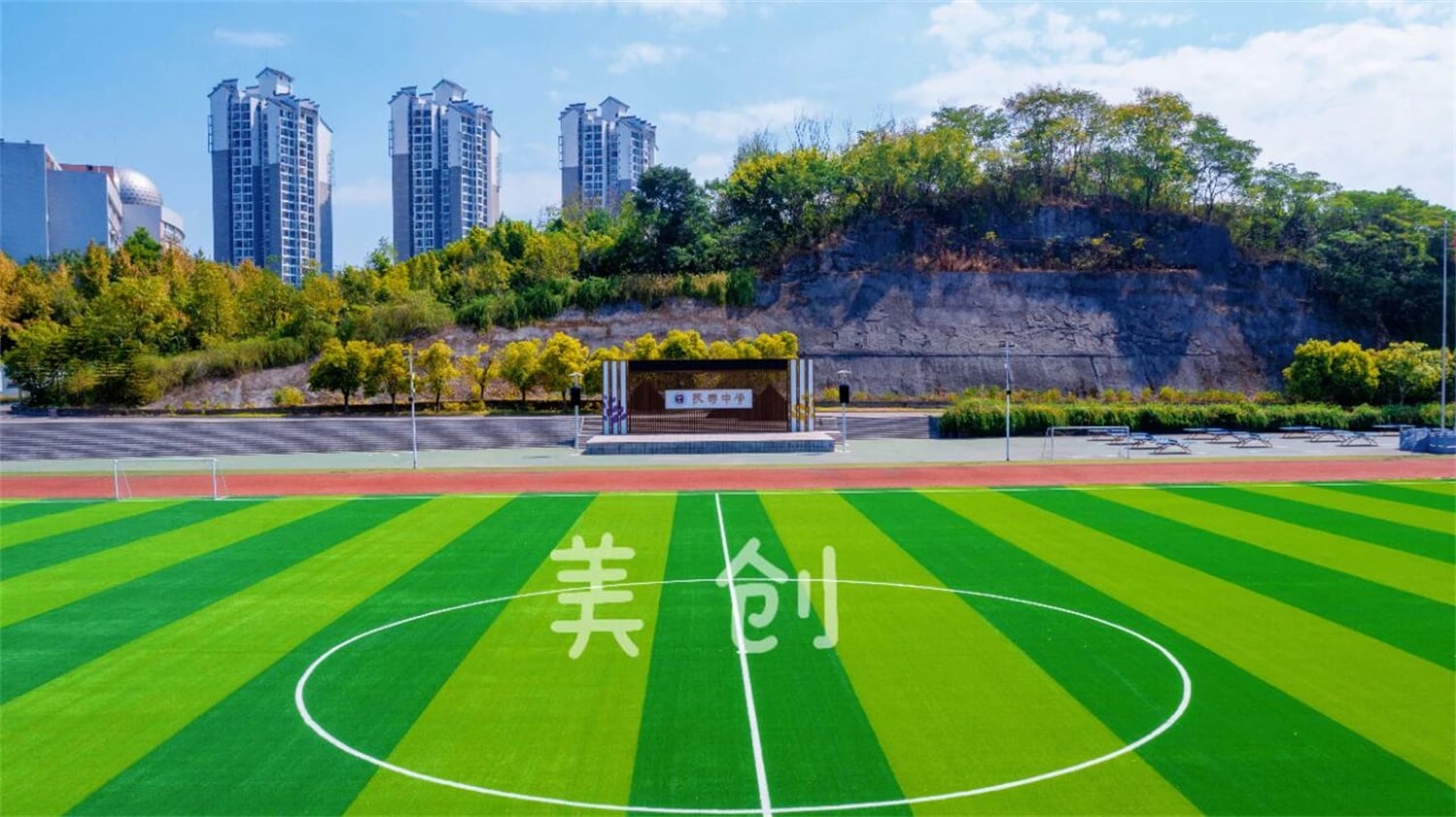
Easier operation: Reduce management difficulty and avoid compliance risks
For the operators, "less worry" is also a core demand. The no-fill lawn significantly reduces the operational difficulty from two major dimensions: management and compliance.
In terms of management, there is no need to be equipped with a professional maintenance team or purchase dedicated equipment. Daily cleaning only requires simple tools, significantly reducing the input of human resources and equipment. In terms of compliance, the no-fill lawn is made of environmentally friendly materials and has passed authoritative certifications such as the EU CE and SGS. It is free of harmful substances like formaldehyde and heavy metals, completely avoiding the environmental compliance risks brought about by the aging of rubber particles in traditional filled fields. It is particularly suitable for campus and community scenarios with high safety and environmental protection requirements.
The core demand for building a football field is to achieve "long-term stable returns and low investment with high returns". The hidden costs and low reuse rate of traditional filled lawns often put operators in a predicament where "the more investment, the more trouble". The no-fill lawn, with its core advantages of "cost-saving throughout the entire cycle, high reusability to increase profits, and low difficulty and easy operation", helps investors avoid pitfalls from the root. It not only meets the current cost control needs but also lays a stable foundation for long-term operation.
Whether you are planning to invest in a commercial football field or renovate campus or community venues, choosing artificial turf without filling is a wise choice that avoids pitfalls - a correct decision in one go, saving you countless subsequent troubles and making the operation of the football field easier and more profitable.