EN

How to Prevent Blistering of Plastic Running Tracks
Blistering, cracking and water‑logging on plastic track sites mostly stem from sub‑base issues rather than surface materials. The quality of the sub‑base determines the service life of the surface layer. According to public industry data, permeable tracks account for approximately 60% of installations in primary and secondary schools. For sites suffering from blistering, cracking and water‑logging after hand‑over, most problems originate from three sub‑base indicators: flatness, drainage gradient and moisture content, instead of the surface materials themselves.
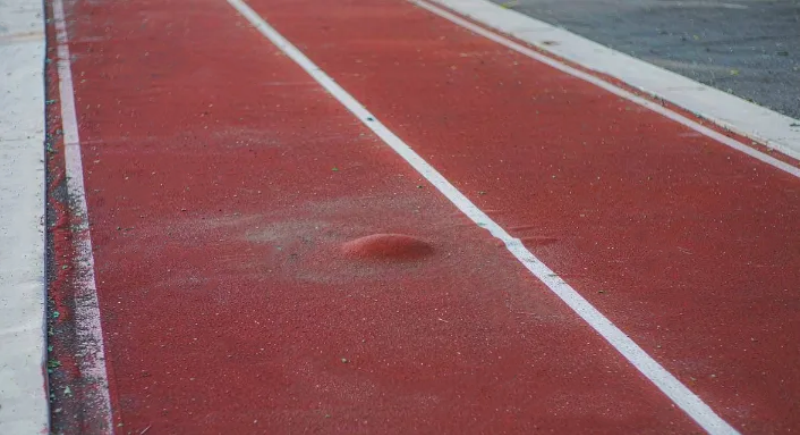
Blistering manifests as local uplift of the surface layer with hollow sounds under foot pressure, and frequently occurs in hot seasons after project delivery. It is generally caused by excessive sub‑base moisture or defective vapour‑barrier treatment; heated water vapour expands and pushes up the surface layer. Cracks extending along sub‑base expansion joints indicate misalignment between sub‑base joint layout and the surface layer, or differential settlement of the sub‑base itself. Water‑logging, meaning standing water persists locally after rainfall, results from insufficient drainage gradient or excessive levelling errors. This problem is further aggravated on plastic tracks and silicon‑PU courts, as ponded water softens the backing fabric and bonding layer.
Sub‑base flatness is normally measured with a 3‑metre straightedge; the smaller the gap between the straightedge and sub‑base surface, the better. Different tolerance standards apply to competition‑grade venues and general teaching‑purpose venues, and allowable deviations shall be specified in technical clauses prior to contract signing. The drainage gradient shall form a continuous slope from the site centre outwards or along a designated direction to avoid local depressions. Moisture content is the most frequently overlooked factor. Installing surface layers on insufficiently‑dried cement or asphalt sub‑bases greatly raises the risk of subsequent blistering. Industry practice requires sub‑bases to reach the specified curing age and undergo moisture‑content testing before construction commences.
Different surface layers impose slightly different sub‑base requirements. Permeable plastic tracks drain through the porous structure of their surface, making them relatively less sensitive to sub‑base conditions, though the sub‑base still must be free of sanding and hollowing. Monolithic mixed‑type and full‑solid tracks transfer sub‑base cracks directly to the surface. Artificial turf bonds to the sub‑base via backing adhesive; moisture content and gradient directly affect drainage and service life. Non‑infill turf features high grass‑fibre density and greater dead weight, so it also places demands on load‑bearing capacity and flatness. Silicon‑PU adopts multi‑layer scraping‑on technology; uneven sub‑base surfaces will cause visual waviness upon project completion.
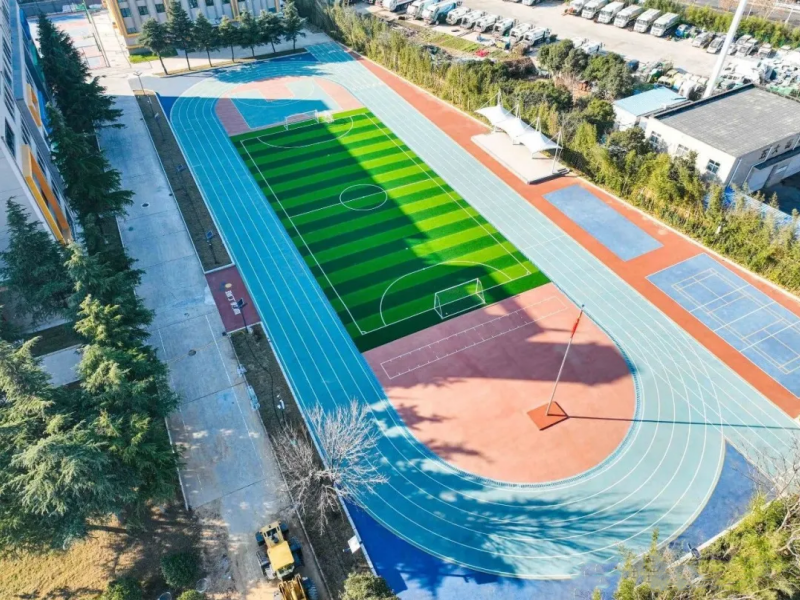
MCG Group is an integrated enterprise specialising in the design, R&D, production, sales and installation of artificial turf, plastic running track and silicon‑PU materials. It operates production bases in Jiangsu and Chongqing and delivers customised solutions for clients. Through years of development, innovation and accumulation, “MCG” has grown into one of the influential brands within the sports‑venue materials sector.