EN

From Base to Surfacing: The Composition of Synthetic Running Tracks
A paved synthetic running track, springy underfoot and resistant to standing water after rainfall, derives these characteristics from its bottom‑to‑top layered construction.
At the very bottom is the base course. The track surfacing is laid on a concrete or asphalt foundation, which serves load‑bearing and levelling purposes. Loads imposed on the surface transmit through the surfacing to the base and then down into the ground. Newly cast concrete bases require a curing period to develop stable strength prior to surfacing installation. Consequently, base construction and surfacing work are usually carried out at different times.
Resting atop the base is the surfacing layer, which falls into two common specifications. Porous permeable tracks contain interconnected voids within the surfacing, allowing rainwater to drain through and minimising surface ponding after rain. Mixed-type tracks feature a compact structure with excellent overall elasticity and are the preferred option for competitive athletics venues; their surfacing is typically approximately 13 millimetres thick. These two variants cater to different scenarios. Standard school playgrounds and competition-standard athletic fields generally adopt different solutions.
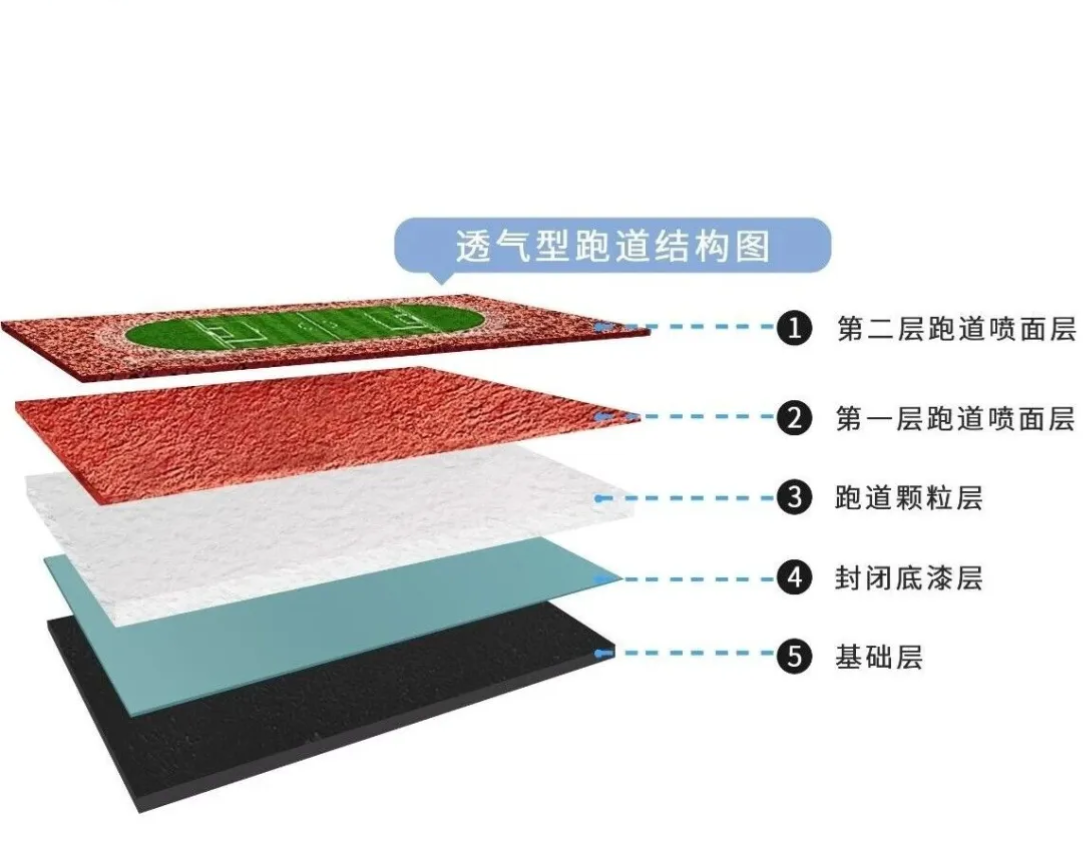
The surfacing material is not delivered as prefabricated rolls. Instead, binder and rubber granules are mixed on‑site before being spread and formed in place. EPDM granules — coloured synthetic rubber particles — are the most common filler, imparting elasticity and anti‑slip traction to the surfacing. National standards specify limits for hazardous substances in such materials, and deliveries for school projects must be accompanied by valid test reports.
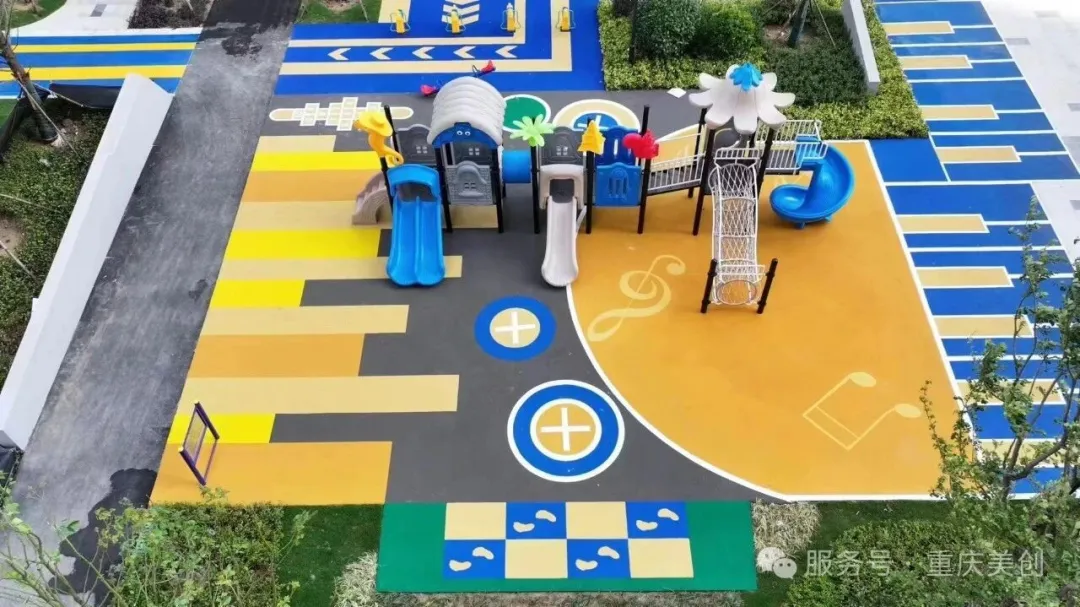
Most completed tracks are brick red, with the pigment incorporated within the rubber granules. Granules can be produced in a range of colours; blue, green and other hues are frequently used in kindergartens and recreational areas. The white lane markings are not pre‑fabricated. Once surfacing is complete, they are painted on using specialist white marking paint, in strict accordance with official athletic field dimensional standards.
Following surfacing placement, the binder requires adequate curing time, during which the track must remain closed to use. Curing rate is temperature‑dependent: it accelerates in warm conditions and slows in cooler weather. For this reason, track installation is mostly scheduled for warmer seasons, and school projects are often completed during summer break. The track is released for service only after curing, marking and successful acceptance inspection.
Under normal operation and maintenance, synthetic running tracks have a design service life of 8 to 10 years. Their actual service life is affected by usage intensity, local climate and foundation integrity. Routine cleaning and debris removal also help preserve the condition of the surfacing.