EN
EN

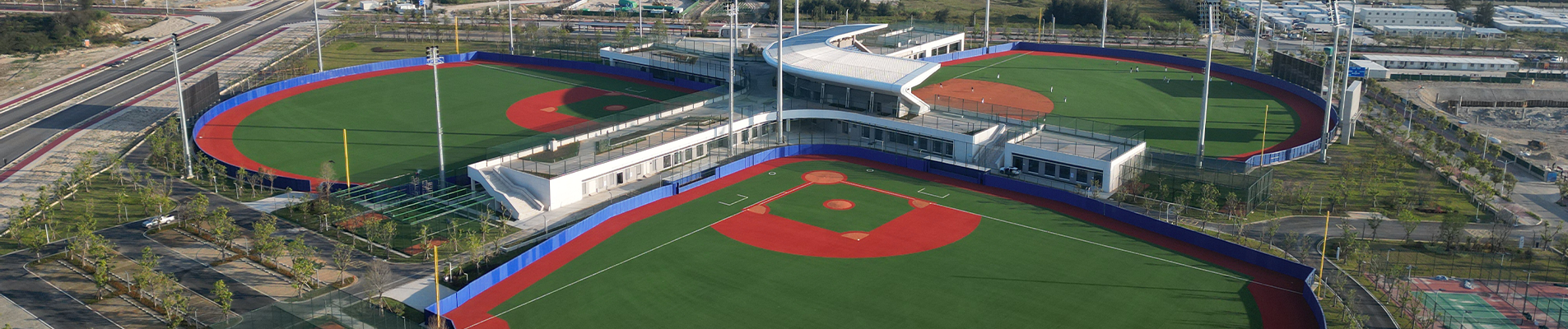
What details should be noted in the daily maintenance of silicon PU basketball court materials?
The daily maintenance of a silicon PU basketball court focuses on preventing damage, pollution and aging. The details should cover four aspects: cleaning, usage taboos, regular inspection and handling of minor issues. The specific details are as follows:
Daily cleaning details
Every day, clean the surface with clean water and a soft broom or mop to remove dust, fallen leaves and other debris. Avoid long-term friction of sharp particles (such as small stones and gravel) on the ground, which may cause scratches on the surface.
When encountering stains such as fruit juice, beverages, and oil stains, they should be wiped off promptly with a neutral cleaner (such as a diluted solution of dishwashing liquid), and then rinsed clean with water. It is strictly forbidden to use strong acid or strong alkali cleaners (such as toilet cleaner and oxalic acid), as they can corrode the elastic layer of the silicon PU material, causing the floor to harden and crack.
After the rain, promptly clear the waterlogged areas, especially the low-lying parts of the site, to prevent the materials from delaminating and bulging due to long-term soaking. Accumulated water can be pushed to the drain outlet with a soft water pusher. Do not use a high-pressure water gun to directly spray the ground at close range, as high-pressure water flow will damage the surface structure.
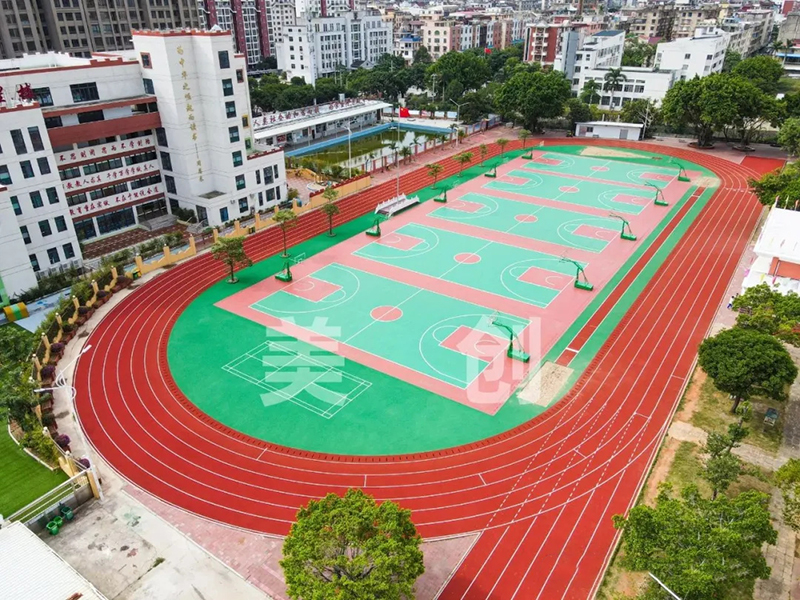
Details of usage taboos
Sharp objects are prohibited from touching the ground directly, such as the spikes of high heels, metal tools, and the sharp edges of hard-soled sports shoes, to avoid piercing or scratching the elastic layer.
It is strictly prohibited to drag heavy objects such as basketball stand bases and fitness equipment within the venue. When moving heavy objects, soft pads or wooden boards should be placed first, and then moved slowly to prevent depressions or tears on the ground.
Control the frequency of venue usage. For professional event venues or frequently used school venues, it is recommended to open them at different times to avoid continuous high-intensity use for 24 hours and reduce material fatigue and wear.
Avoid prolonged idling and exposure to direct sunlight during high-temperature periods. In summer, it is advisable to sprinkle water appropriately at noon to lower the temperature and slow down the aging of materials. When the temperature is low in winter, do not strike the ground forcefully. At this time, the toughness of the material decreases and it is prone to cracking.
Regularly check and maintain the details
Weekly inspection
Check the ground for any small cracks, delamination, blisters, scratches or other issues. If small areas of damage (less than 10cm²) are found, promptly fill and repair them with the same model of silicon PU repair material to prevent the damage from expanding.
Monthly maintenance
Inspect the expansion joints on the site. If the filling material inside the expansion joints falls off, it should be replenished in time to prevent rainwater from seeping into the foundation and causing the entire ground to bulge.
Annual deep maintenance
Apply a dedicated silicone PU floor maintenance agent evenly once, which can play an anti-oxidation and anti-ultraviolet role, and extend the service life of the material. At the same time, check the edge strips of the venue. If they are loose or fallen off, they need to be re-fixed to prevent the spread of edge damage.
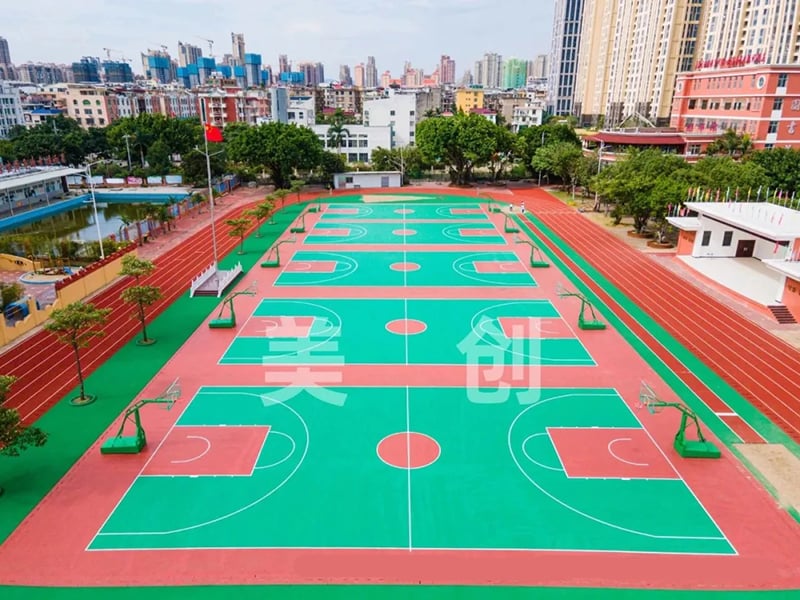
Details for handling special circumstances
If there are local small cracks (less than 2mm in width) on the ground, you can first clean the dust inside the cracks, then inject special sealant, and smooth the surface with repair material. When the crack width is greater than 2mm, the damaged part needs to be cut off, the foundation treatment should be redone, and then the silicon PU material should be laid.
Fireworks and firecrackers are strictly prohibited in the venue. High temperatures from open flames can directly burn the silicon PU elastic layer, causing permanent damage. Also avoid contact with organic solvents (such as gasoline and paint), as they can dissolve the surface layer of the material, causing the floor to become sticky and peel off.